- Insights
Why healthcare brands need to sell confidence, not products
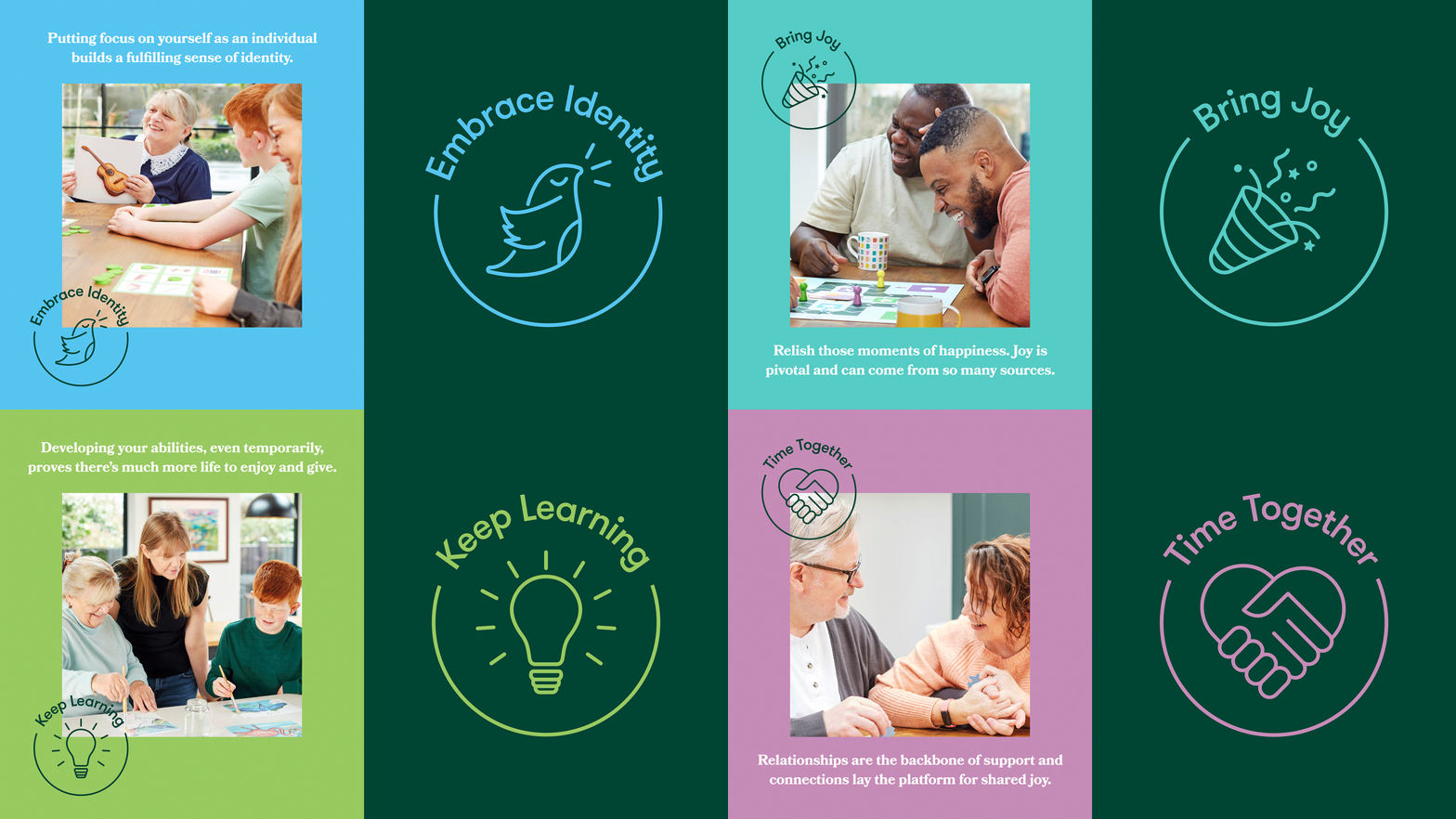
Healthcare marketers often assume the barrier to growth is awareness. It isn’t. More often, it’s uncertainty.
Families making healthcare decisions are rarely choosing between products in the neat, rational way marketers like to imagine.
More often, they are navigating uncertainty, emotion, incomplete knowledge and the very real fear of getting something important wrong.
And uncertainty changes behaviour.
People delay decisions. They default to familiar options. They rely heavily on intermediaries. They buy cautiously. Sometimes they disengage altogether.
For healthcare brands, that creates a hidden commercial challenge.
Even clinically credible businesses can become trapped in product-led selling when what customers actually need is confidence, guidance and reassurance.
That was the challenge we encountered in dementia care.
The commercial ambition was clear: significant growth in the US, a shift from established B2B credibility towards stronger direct-to-consumer relevance, and ultimately leadership in the dementia wellbeing category. But the category itself was working against that ambition.
Products were fragmented. The language often felt either clinical or infantilising. Aggregators dominated discovery. Families were being asked to choose between individual products they didn’t fully understand, with little context around suitability, progression or likely outcomes.
The category was selling activities, but families weren’t looking for puzzles, they were buying reassurance. They were looking for confidence, guidance and something positive they could do. Most importantly, they wanted help understanding how their loved one was experiencing the world, and what support might genuinely help.
Without that clarity, decision-making stalled, capabilities were underestimated, poduct choices became guesswork, confidence stayed low and engagement suffered.
And commercially, that friction compounds quickly at the point of purchase, across cross-sell opportunities, through customer retention and ultimately across lifetime value.
Reframing the category, not the packaging
The instinct in situations like this is often to focus on product presentation. And with sharper packaging, slearer naming and better ecommerce merchandising.
But the real issue wasn’t presentation.
It was decision-making confidence.
So we didn’t begin with design. We began with behaviour. Rather than selling products or activities in isolation, we reframed the offer around a dementia wellbeing journey – shifting the conversation from transactions to outcomes.
From What should I buy?
To What would genuinely help?
That required more than positioning language. It required practical decision architecture. We developed a simple progression model that helped families understand different stages, identify the appropriate level of challenge and make more confident choices.
We built a wellbeing framework that connected products to emotional and therapeutic outcomes, rather than product categories alone. Not simply puzzles. But support for memory, calm, communication, connection and confidence.
That changed how the offer was understood.
Customers could now navigate by need rather than product code.
And when people feel more confident, behaviour changes. Because effective healthcare branding does not simply create recognition. It reduces uncertainty.
A broader healthcare lesson
This challenge extends far beyond dementia.
Across healthcare, healthtech and wellbeing, many organisations remain overly focused on products, features, technical expertise or clinical capability, while underinvesting in the emotional realities of decision-making.
But healthcare decisions are rarely made from a place of certainty. They are made while anxious. While overwhelmed. While hopeful. While trying to interpret unfamiliar information under emotional pressure.
The organisations that grow will not simply be the most clinically credible.
They will be the ones that make decision-making feel clearer, safer and more human.
Because in healthcare, confidence is often the product.
The commercial impact of reducing uncertainty
This was never simply a brand exercise. Organising the experience around the customer journey created tangible commercial advantages.
Reducing uncertainty reduced friction at the point of purchase. It created more natural cross-sell opportunities, strengthened customer retention, increased direct-to-consumer relevance and reduced reliance on intermediaries in a crowded market.
More importantly, it created stronger emotional differentiation in a category where products alone were increasingly interchangeable.
Because we designed around progression, confidence and care journeys, not transactions.